One-tap access to a simplified emergency interface
In emergency care, speed and clarity can make all the difference. Clinicians often need to access vital information in seconds, while managing complex situations and making high-pressure decisions. Recognising this challenge, Class Professional has developed Emergency Mode, an innovative feature within JRCALC Plus designed specifically for time-critical situations.
“I’ve said what I missed about the pocketbook was how quick it was to access the algorithms. Emergency Mode has now brought that back.”
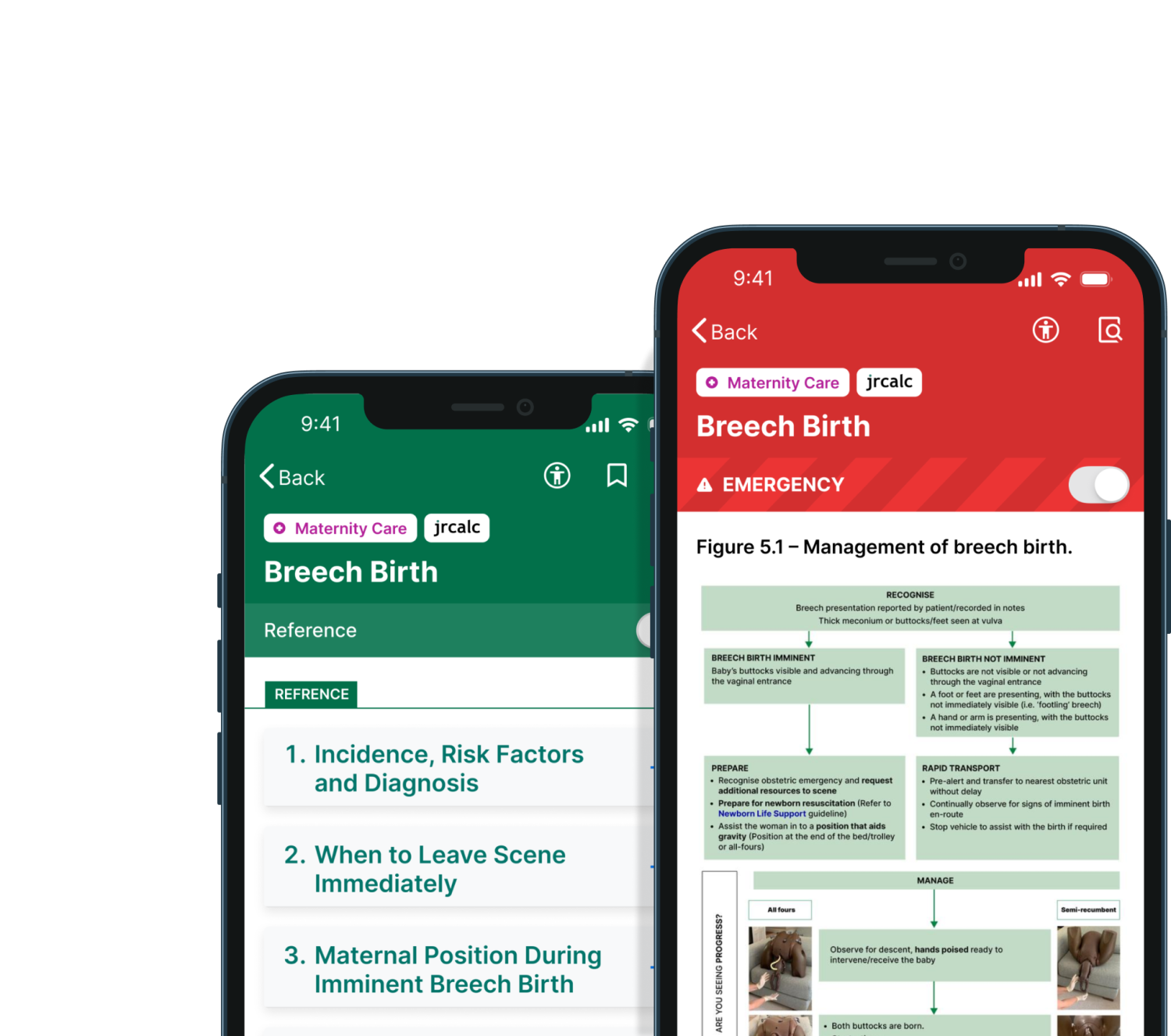
Emergency Mode was created in response to feedback from ambulance clinicians who wanted a quicker, more streamlined way to access essential guidance during patient encounters. Inspired by the simplicity and practicality of the former JRCALC Pocket Book, it provides rapid access to critical clinical information without sacrificing the depth and reliability of the full reference content.
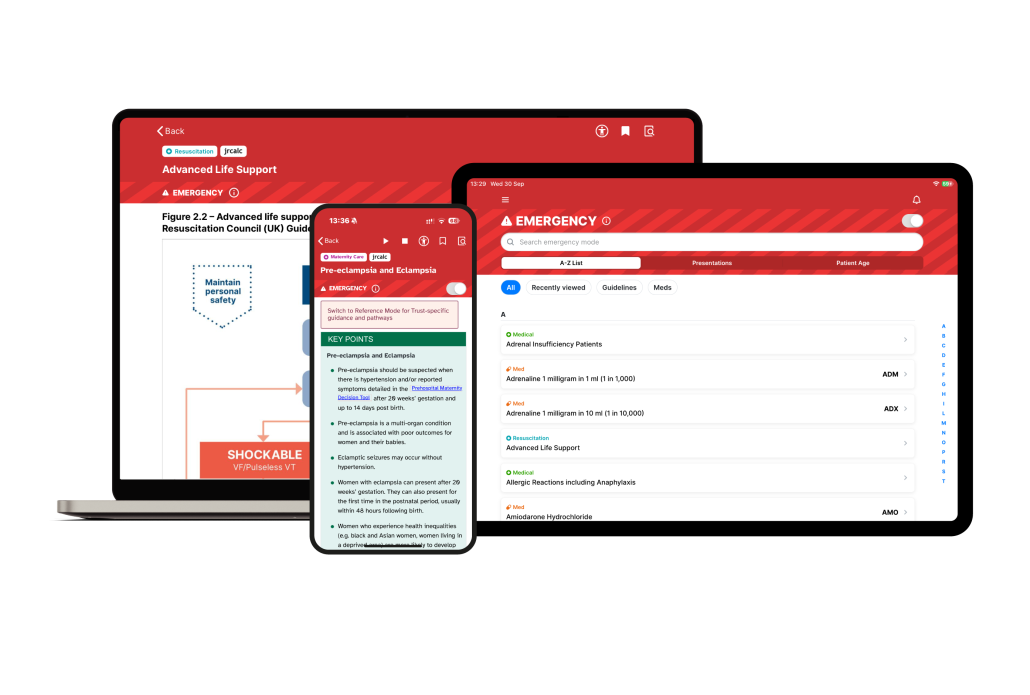
At the touch of a button, users can switch from the comprehensive Reference Mode to a distraction-free Emergency Mode interface, allowing them to focus on the information that matters most in the moment.
Emergency Mode has been designed to support clinicians when time is limited and decisions must be made quickly. Rather than navigating extensive guideline content, users are presented with only the most essential steps and information required for urgent patient care.
This balance between speed and clinical confidence helps ensure practitioners have access to the right information at the right time.
Emergency Mode was evaluated within JRCALC Plus by participating NHS ambulance trusts during 2026. Feedback from frontline users is currently being reviewed as part of the ongoing development process. Following a largely positive response, South Central Ambulance Service (SCAS) has chosen to continue making Emergency Mode available to staff while further enhancements are considered.
This collaborative approach reflects Class Professional’s commitment to creating digital tools shaped by the realities of frontline clinical practice.
“Great idea, very useful, know when you’re in the emergency mode and reduces anxiety during those potential stressful scenes.”
“Please keep this as it is so useful as a neurodivergent clinician.”
Clinical safety remains a fundamental priority. Emergency Mode has been assessed in line with the DCB0129 clinical safety standard, supported by a comprehensive clinical safety case and updated hazard log. In addition, the full Reference Mode remains available at all times, ensuring clinicians can access more detailed content whenever necessary.
The feature also supports offline access, enabling clinicians to use Emergency Mode even when connectivity is limited, provided they have previously logged into the application.
Emergency Mode offers several intuitive ways to locate guidance rapidly:
Emergency Mode represents an important step forward in the evolution of digital clinical support tools. By combining trusted JRCALC guidance with a streamlined, user-focused experience, it helps clinicians access essential information faster, reduce cognitive load and maintain confidence in high-pressure situations.
As Class Professional continues to gather feedback and refine the feature, Emergency Mode demonstrates how thoughtful digital innovation can support better clinical decision-making and ultimately contribute to improved patient care.
When every second matters, Emergency Mode puts critical guidance at clinicians’ fingertips.
 https://www.classprofessional.co.uk/wp-content/uploads/2026/03/Logo-1.png
1080
1080
Emma Phillips
https://www.classprofessional.co.uk/wp-content/uploads/2026/01/CP_logotype_horiz_purple_RGB.svg
Emma Phillips2026-05-08 14:58:102026-05-27 08:21:48A New App for Ambulance Drivers
https://www.classprofessional.co.uk/wp-content/uploads/2026/03/Logo-1.png
1080
1080
Emma Phillips
https://www.classprofessional.co.uk/wp-content/uploads/2026/01/CP_logotype_horiz_purple_RGB.svg
Emma Phillips2026-05-08 14:58:102026-05-27 08:21:48A New App for Ambulance Drivers https://www.classprofessional.co.uk/wp-content/uploads/2023/02/ParaFolio-Logo-2.png
3375
3375
Emma Phillips
https://www.classprofessional.co.uk/wp-content/uploads/2026/01/CP_logotype_horiz_purple_RGB.svg
Emma Phillips2026-05-08 11:59:282026-05-12 14:32:55ParaFolio Update: A Stronger Infrastructure
https://www.classprofessional.co.uk/wp-content/uploads/2023/02/ParaFolio-Logo-2.png
3375
3375
Emma Phillips
https://www.classprofessional.co.uk/wp-content/uploads/2026/01/CP_logotype_horiz_purple_RGB.svg
Emma Phillips2026-05-08 11:59:282026-05-12 14:32:55ParaFolio Update: A Stronger Infrastructure
iCPG is a digital version of the official JRCALC guidelines for ambulance service practitioners. It allows emergency services staff to access up-to-date guidance on medical conditions and drug dosages at...
View